


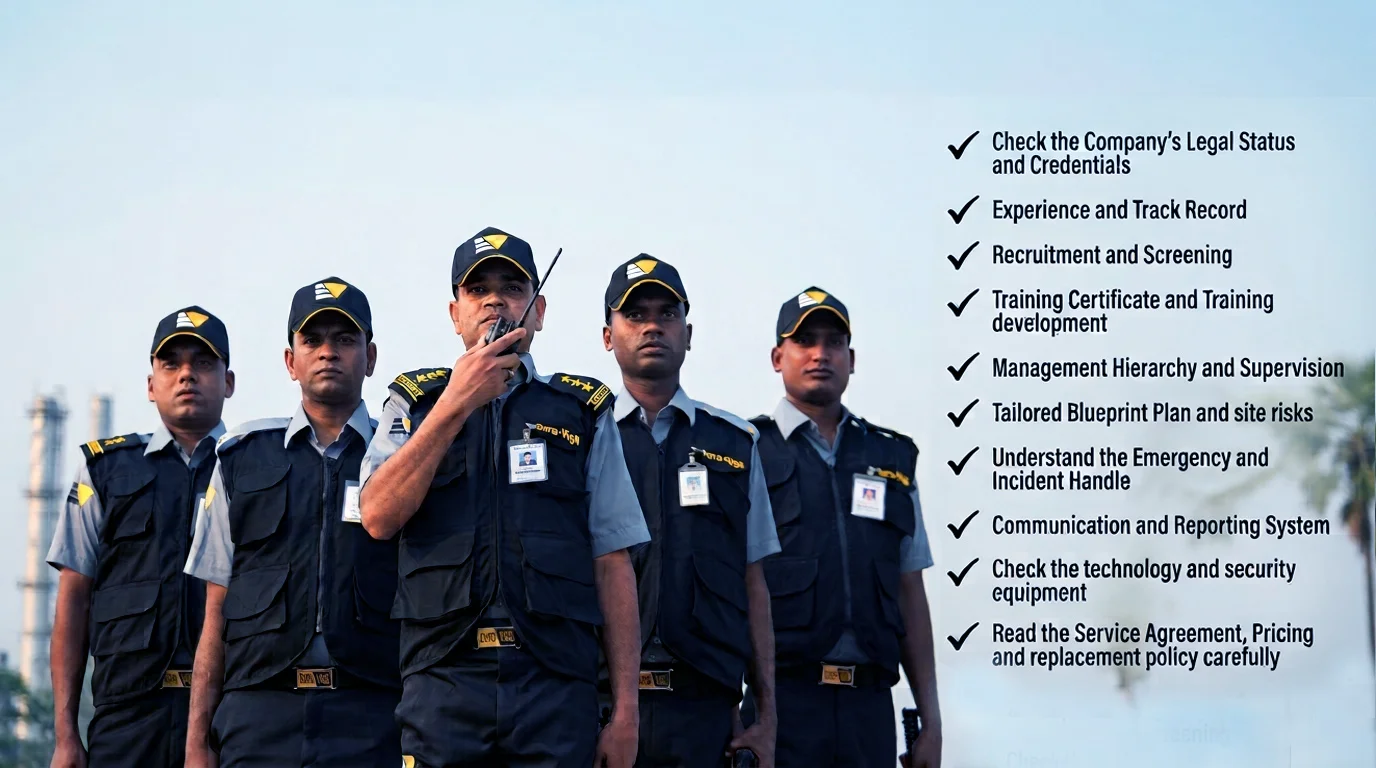
Choosing a security company is an important decision for any business, industrial facility, corporate office, residential property, or other institution. The right security service provider should understand your risks, deploy suitable security guards, maintain effective supervision, and respond appropriately to incidents.
Before hiring a security company in Bangladesh, look beyond the price. These 10 essential checks will help you compare providers, ask the right questions, and choose a security partner that meets your actual needs.
Why Choosing the Right Security Company Matters
Different properties face different security risks. A factory may need perimeter protection and vehicle checks, while a corporate office may prioritize access control and visitor management.
Choosing the Right Security Company helps ensure that your security arrangements match your site’s risks, operating hours, and daily activities. A reliable provider should also offer clear responsibilities, consistent supervision, and effective communication.
1. Check the Company’s Legal Status and Credentials
Start by verifying the company’s legal status, relevant security licences, and registration documents. You can also review quality certifications and industry memberships, but remember that these do not replace legal authorization or guarantee service quality.
Euro Vigil (Pvt.) Ltd. states that it holds ISO 9001:2015 certification and has been a member of the Bangladesh Professional Security Services Providers Association (BPSSPA) since 2012. You can check BPSSPA member profile for more information.
Key Questions to Ask:
- Legal Compliance: Can you provide your current licence and relevant registration documents?
- Verified Credentials: Can your certifications and industry memberships be independently verified?
- Quality Management: How do you maintain and review your service standards?
2. Evaluate the Company’s Experience and Track Record

Experience matters when a security provider must manage different sites, operational challenges, and staffing requirements. Look for experience relevant to your industry rather than relying only on the company’s years in business.
Client references and examples of previous work can help you assess reliability, responsiveness, and service consistency. Where possible, speak with existing clients about their experience.
Key Questions to Ask:
- Relevant Experience: Have you managed security for sites similar to ours?
- Proven Track Record: Can you provide client references or relevant case studies?
- Operational Consistency: How do you maintain service quality across different locations and shifts?
3. Ask How Security Guards Are Recruited and Screened
Security guards may have access to employees, visitors, buildings, and valuable assets. Their suitability and integrity are therefore essential. Ask how candidates are recruited and whether the company conducts identity verification, background checks, reference checks, and other relevant screening before deployment.
Screening procedures should reflect the responsibilities of the role and applicable requirements. A professional provider should be able to explain its process clearly.
Key Questions to Ask:
- Identity Verification: How do you verify a candidate’s identity and credentials?
- Background Screening: What background and reference checks do you conduct?
- Candidate Suitability: How do you determine whether a guard is suitable for our site?
4. Verify Guard Training and Professional Development
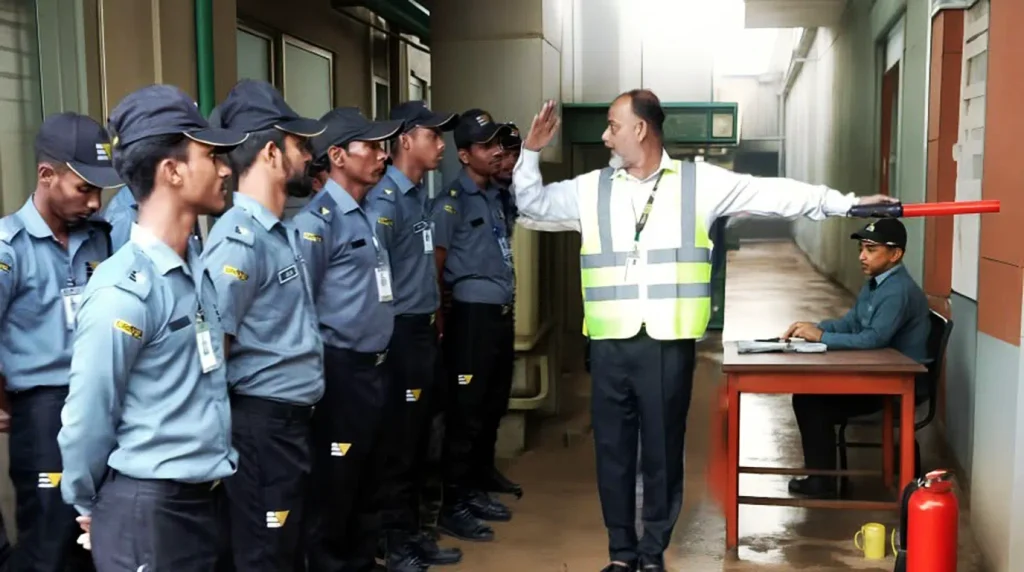
Security guards need practical training, not just uniforms and basic instructions. Depending on their assignments, they may need skills in access control, patrolling, visitor management, communication, incident reporting, and emergency response.
Ask whether guards receive training before deployment and whether they are briefed on your site’s specific rules and risks. Ongoing training also helps maintain professional standards as requirements change.
Euro Vigil (Pvt.) Ltd. operates three state-of-the-art security guard training centers in Dhaka, Chattogram, and Cox’s Bazar, providing professional security and emergency response training across Bangladesh.
Key Questions to Ask:
- Pre-Deployment Training: What training must guards complete before starting work?
- Site-Specific Briefing: Are guards trained on our site’s procedures and risks?
- Ongoing Development: How do you refresh skills and address performance gaps?
5. Understand the Company’s Supervision and Management System
Effective security requires consistent supervision. Without it, guards may fail to follow procedures, maintain patrol schedules, or handle responsibilities correctly across different shifts.
Ask how supervisors inspect sites, monitor attendance, evaluate performance, and resolve problems. You should also know who manages your account and whom to contact when an issue arises.
A clear management structure helps connect frontline guards with operational management and the client.
Key Questions to Ask:
- Site Supervision: How often do supervisors inspect our premises?
- Performance Monitoring: How do you monitor attendance and compliance with duties?
- Accountability: Who handles complaints, recurring problems, and corrective actions?
6. Make Sure the Security Plan Is Customized to Your Site
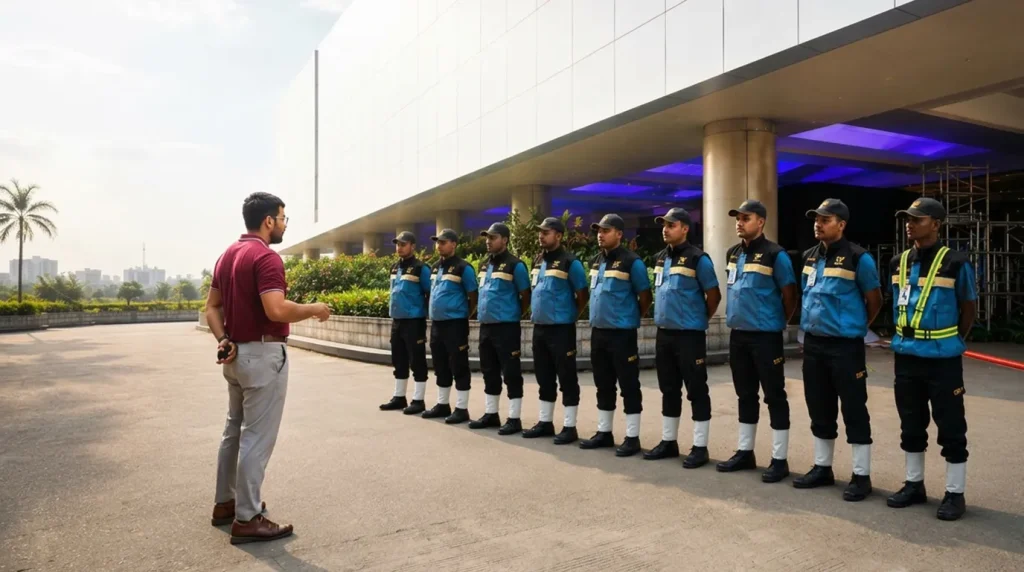
A standard security package may not address your property’s specific risks. Before proposing a deployment plan, a security company should understand your access points, operating hours, visitor movement, vulnerable areas, and existing security systems.
A site assessment can help determine the appropriate number of guards, their duties, and any additional security measures required.
Euro Vigil (Pvt.) Ltd. offers Security Survey and Risk Assessment Services to help organizations evaluate security needs.
Key Questions to Ask:
- Risk Assessment: Will you assess our site before preparing a proposal?
- Deployment Planning: How will you determine guard numbers and responsibilities?
- Adaptability: Can the plan change as our operations or risks evolve?
7. Check How the Company Handles Emergencies and Incidents
A security provider should have clear procedures for incidents such as unauthorized entry, theft, fire, medical emergencies, and workplace disturbances. Guards need to know what actions to take, whom to notify, and when to escalate an incident to emergency services.
Ask how incidents are documented and reviewed afterward. For higher-risk sites, find out whether emergency scenarios are included in training and whether drills are conducted where appropriate.
Key Questions to Ask:
- Emergency Procedures: How are guards expected to respond to different incidents?
- Incident Escalation: Who will be notified, and how quickly?
- Follow-Up: How are incidents documented, investigated, and reviewed?
8. Check the Company’s Reporting and Communication System
Clear reporting helps you understand what is happening at your site and whether agreed security procedures are being followed. Depending on your requirements, reports may cover attendance, patrols, visitor records, supervisor inspections, and security incidents.
Agree on reporting frequency, communication channels, and escalation contacts before service begins. This ensures that both parties understand what information must be shared and how urgent concerns will be handled.
Key Questions to Ask:
- Reporting Standards: What reports will we receive, and how often?
- Communication: Who will be our primary contact?
- Issue Resolution: How are urgent concerns and unresolved problems escalated?
9. Understand the Use of Technology and Security Equipment

Technology can strengthen physical security when it addresses a specific risk. Depending on your site, relevant systems may include CCTV, electronic access control, visitor management, alarms, and patrol verification.
However, equipment alone does not guarantee effective protection. Clarify who supplies, operates, monitors, and maintains each system, especially if your organization already has security equipment installed.
Key Questions to Ask:
- Suitable Technology: Which systems are appropriate for our security needs?
- System Integration: Can your personnel work with our existing CCTV and access-control systems?
- Maintenance and Monitoring: Who handles equipment faults, monitoring, and incident escalation?
10. Read the Service Agreement, Pricing and Replacement Policy Carefully
Before signing a contract, review the scope of work, staffing arrangements, shift coverage, supervision, and any additional charges. Compare providers based on the services included, not just the quoted price.
The agreement should also explain replacement arrangements for absent or unsuitable guards, payment terms, contract duration, termination conditions, and each party’s responsibilities. Clear terms reduce misunderstandings and help you measure service performance.
Key Questions to Ask:
- Transparent Pricing: What services and additional costs are included in the quotation?
- Staff Replacement: How do you arrange replacements when guards are absent or unsuitable?
- Contract Terms: What are the payment, renewal, termination, and service-level conditions?
Conclusion: Choose a Security Company in Bangladesh
Choosing a security company requires careful evaluation of credentials, personnel, training, supervision, and service commitments. Verify claims, compare proposals, and ensure the provider understands your site’s specific risks.
A reliable security partner should offer more than guards. It should provide a range of security solutions supported by clear responsibilities, effective communication, and proper supervision to meet your organization’s needs.